


Product name: LEAD SCREW
Material: 303 stainless steel
MOQ: 5 pcs
CNC Precision Machining
Professional CNC Precision Machining Suppliers and Manufacturers
S PIERSON MACHINERY SDN.BHD. is an versatile manufacturing enterprise with strong internal self-matching ability and perfect production and testing equipment. We' re not only selling precision small parts, but also provide good after-sale services. Our company focuses on the processing of CNC Precision Machining. It can process stainless steel, alloy steel, aluminum alloy, copper and engineering plastics and other materials. Our company has 8 four-axis machining centers and more than 40 processing equipment to meet the different order requirements of customers.
-
![Lead Screw for Motor]()
-
![Adapter Linear Housing Flange]() Adapter Linear Housing FlangeProduct name: Adapter linear housing flangeread more
Adapter Linear Housing FlangeProduct name: Adapter linear housing flangeread more
Material: Brass
Product advantage: small MOQ, 5 pcs order samples accepted, short delivery date,for standard sample, 3 days can be... -
![CNC Metal Parts Machining Services]() CNC Metal Parts Machining ServicesWe have provided the most CNC machined parts made from the following materials:read more
CNC Metal Parts Machining ServicesWe have provided the most CNC machined parts made from the following materials:read more
Aluminum All Alloys 3000, 5000, 6000, 7000 series
Bronze
Copper -
![Linear Rall System Slide Block Assembly]() Linear Rall System Slide Block AssemblyPart to be free of burrs, dirt,grease,oil or any other surface contaminant.read more
Linear Rall System Slide Block AssemblyPart to be free of burrs, dirt,grease,oil or any other surface contaminant.read more
Press fit assembly dimension applies to each pin.
Press fit SS pins P/N 26-1958, per side, into slide... -
![Dual Motion Slide Bearing Housing for Stepper Motor]() Dual Motion Slide Bearing Housing for Stepper MotorProduct name: dual motion slide bearing housing for stepper motorread more
Dual Motion Slide Bearing Housing for Stepper MotorProduct name: dual motion slide bearing housing for stepper motorread more
Material: aluminum 6061
Finish: black anodize -
![Custom CNC Machinery Parts-mount Black]() Custom CNC Machinery Parts-mount BlackProduct name: Custom CNC machinery parts-mount blackread more
Custom CNC Machinery Parts-mount BlackProduct name: Custom CNC machinery parts-mount blackread more
Material: aluminum 6061
Finish: black anodize
MOQ: 5PCS -
![CNC Turning and Milling Parts]() CNC Turning and Milling PartsProduct name: custom cnc parts-end coverread more
CNC Turning and Milling PartsProduct name: custom cnc parts-end coverread more
Material: aluminum 6061
Finish: black anodize
MOQ: 5PCS -
![CNC Machined Aluminum Parts]() CNC Machined Aluminum PartsProduct name: belt wheelread more
CNC Machined Aluminum PartsProduct name: belt wheelread more
Material: aluminum 6061
Finish: natural anodizing, thickness 10-15 microns.
MOQ: 5PCS -
![Custom CNC Processing]() Custom CNC ProcessingProduct name: rear enclosureread more
Custom CNC ProcessingProduct name: rear enclosureread more
Material: aluminum 6061
Finish: anodize
Tolerance:0.005 -
![CNC Small Parts Manufacturing]() CNC Small Parts ManufacturingProduct name: adapter flangeread more
CNC Small Parts ManufacturingProduct name: adapter flangeread more
Raw Material: aluminum 6061
Finish: not requested
Outer diameter: Φ 51.994 -
![Medical Precision Parts]() Medical Precision PartsIn the medical manufacturing sector, precision is paramount. Our company specializes in providing medical precision components that meet the rigorous standards of the healthcare industry.read more
Medical Precision PartsIn the medical manufacturing sector, precision is paramount. Our company specializes in providing medical precision components that meet the rigorous standards of the healthcare industry.read more -
![Machining 6061 Aluminum Lathe]() Machining 6061 Aluminum LatheIn the realm of precision engineering, the machining of 6061 aluminum lathe components stands as a cornerstone of quality and performance.read more
Machining 6061 Aluminum LatheIn the realm of precision engineering, the machining of 6061 aluminum lathe components stands as a cornerstone of quality and performance.read more


Introduction to CNC Precision Machining
CNC machining is the most common form of machine tool used in high-precision manufacturing. It allows for fast, precise, and efficient production of parts by using a computer program that controls the movement of the machine tools. CNC stands for Computer Numerical Control.
Advantages of CNC Precision Machining
High-class Machining Technology
The precision CNC machining equipment is a state-of-the-art technology that stays true to industry 4.0 standards. It eliminates excessive labor requirements and operates heavy machinery.
Regardless of the CNC machine tool used, computer programs now allow the automation of most operations. They are "live operators" that manipulate cutting tools and shape different raw materials to desired finished products.
Improved Performance and Reliability
While some applications can accept traditional machining results, others have tight tolerance requirements. These requirements demand high precision machining.
Moreover, most industries often require many identical parts. This is only possible with the repeatability of precision CNC machining. Quality processes are always in place, with CNC machines applying similar cuts and maintaining equal quality on all parts.
Extensive Range of Applications
Precision machining processes are compatible with several materials, including high-grade metals and plastics. This flexibility helps businesses of different sizes to compete and offer custom designs and parts.
In addition, the repeated achievement of tight engineering tolerances can help establish customer confidence. Several industries can benefit from precision CNC machining, including automotive, metalworking, aerospace, marine, agriculture, consumer goods, etc.
Reliable Part Quality
CNC precision machining quality is unmatched. It eliminates any variation involved in conventional machining due to the use of computer numerical control.
The process can run for several hours, requiring only minimal maintenance and advanced software to meet design needs. As a result, even the most complex parts can be created with advanced processes to ensure the highest quality that exceeds customer expectations.
Reduced Cycle Times and Lower Labor Costs
CNC precision machining can meet higher production demands due to its enhanced machining automation and programming abilities without interruptions to machine use. High-precision machines are designed to be highly accurate and provide repeatable results.
However, conventional machining requires manual monitoring and adjustments of the tooling and running speeds. On the other hand, a CNC machine can run programs created offline. One machine operator can change over machining centers and run various productions. The operator maintains load parts and tooling and performs offline deburring and quality control.
Why Choose Us?
Wide range of processed materials
Our company focuses on the processing of CNC high-precision parts. It can process stainless steel, alloy steel, aluminum alloy, copper and engineering plastics and other materials.
Wide Range of Applications
It mainly serves various stepper motors, micro motors, medical equipment, small agricultural machinery, food Machinery, textile machinery, and other industries.
Advanced Equipment
Our company currently has more than 40 sets of processing equipment such as 8 four-axis machining centers, centering machines, turning and milling composites, etc., which can meet the different order needs of customers.
Professional Service
We' re not only selling precision small parts, but also provide good after-sale services. Our product qualification rate and timely delivery rate can reach 98%, and we were once favored by High praise from customers.
Common Production Equipment for CNC Precision Machining
01/
Four-axis Machining Centers
4-axis CNC machines work smoothly by allowing the machine tool to move along the X, Y, and Z axes while rotating the workpiece on the A axis concurrently. The added axis permits the tool to machine the workpiece from different angles, creating complex parts with tight tolerances.
02/
Centering Machines
Centering machines are essential machine tools for machining many parts, especially axisymmetrical parts. Their main task is to perform end facing and centring on the ends of tubes, bars or forgings. In machine shops, they are mainly used to carry out initial operations, in order to reduce costs and time for successive machining operations.
03/
Milling Machines
A milling machine can be used for many different purposes such as machining flat surfaces, irregular surfaces, drilling, boring, threading, and slotting. Complex parts such as gears can be crafted easily with a milling machine. Milling machines are a multi-purpose machinery due to the wide variety of parts made using these.
04/
CNC Lathes
CNC lathes are the most compact CNC machines in existence and have the least amount of parts. They can only be fed materials in a single linear motion and are generally good for creating small components such as screws, bolts, shafts, and other types of metal fabrication, but not for creating large interactive environments and art installations.
05/
CNC Laser Cutting
CNC laser machines produce exact cuts and are the best for engraving materials with the highest accuracy. The laser works by heating the material until it melts into a new shape and is best used on sheet materials. CNC laser machining can be used for the entire project or finishing touches.
06/
CNC Plasma Cutting
CNC plasma cutting machines use a form of electronic ionization to heat the air to 50 thousand degrees Fahrenheit to create a plasma torch that can melt through almost anything, making clean cuts in even the hardest of materials.
Materials That Can Be Processed by CNC Precision Machining
CNC machining can use a variety of materials, including metals and non-metals. The following are some common CNC machining materials:
Aluminum
Considered exotic in relation to manufacturing, aluminum is perhaps the most widely used CNC milling material. Ability to be machined quicker than others makes aluminum a more useful material for CNC machining. Being lightweight, non-magnetic, corrosion-resistant and inexpensive, aluminum is largely used in the production of aircraft components, automotive parts, bicycle frames, and food containers.
Stainless Steel
Stainless steel alloys are impervious to most stains and rust. Favored for its strength and resistance to corrosion, the material is used for anything from surgical equipment to electronics hardware. Stainless steel is a very versatile material and is relatively lightweight and durable, broadening its applications across industries.
Carbon Steel
Carbon steel is also one of the popular materials considered for CNC machining. It is available in a variety of formulations and you can select from them depending on your application requirements. The material is largely chosen for CNC machining owing to its durability, safety, long shelf life, affordability, and environment-friendly nature.
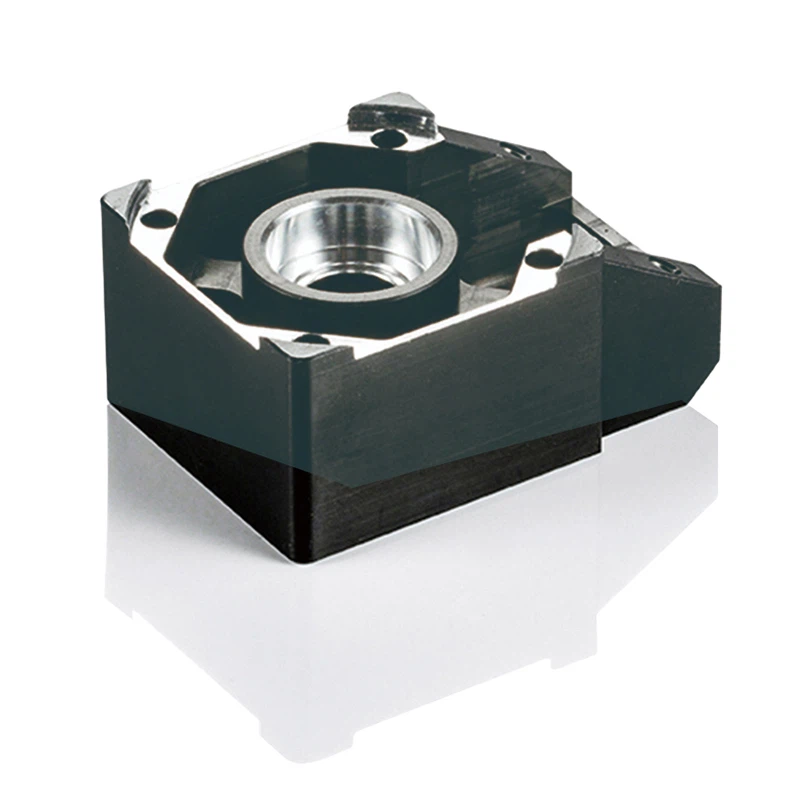
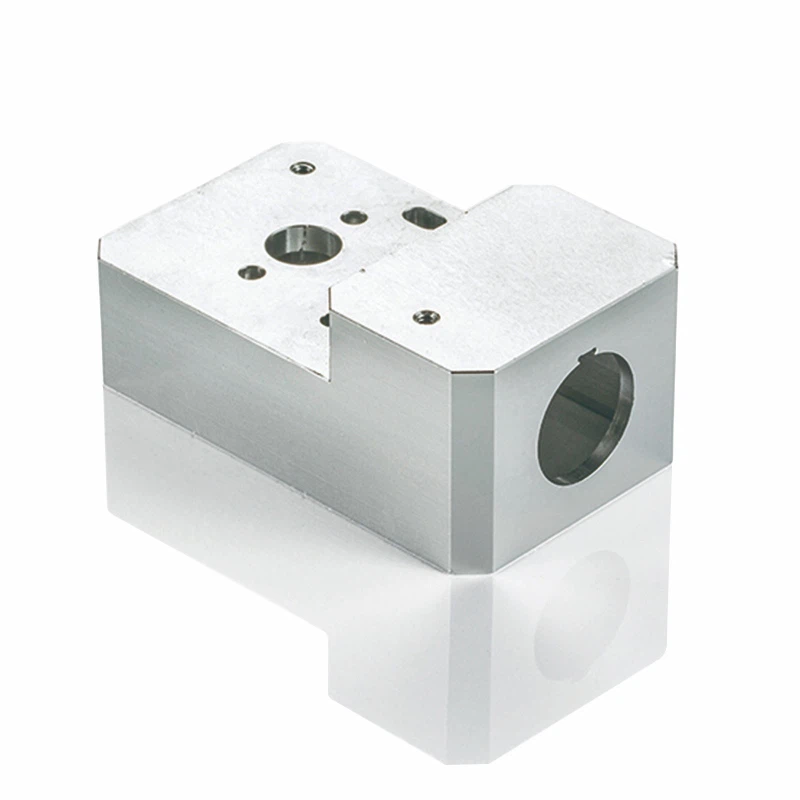
Brass
Widely established as one of the easiest and cost-effective materials to use with precision machining services, brass is chosen to make intricate parts that require sophisticated features. With the ease of machining, smoothness, and clean finish, brass is used in the making of medical equipment, consumer goods, electronic hardware and contacts, fittings, commercial products, among others.
Titanium
Titanium is resistant to heat and corrosion, making it a viable choice for many industrial applications. Impervious to salt, and water, titanium is widely chosen in the making of medical implants, aircraft components, and jewelry, among others.
Magnesium
Magnesium is the lightest structural metal widely used by precision machining services providers. Exhibiting excellent machinability, magnesium provides strength and sturdiness that makes it well-suited for applications across several industrial sectors.
Industries Served by CNC Precision Machining
Medical Industry
The medical field relies on customized, quality products to maintain a high level of patient safety and care. Various types of CNC machines adapt well to the medical industry's needs.
Benefits of CNC machines in the medical field include the ability to create customized parts rapidly. Those in this industry, however, also require the manufacturing of these parts in FDA-approved environments. When crafting individual designs, the CNC software allows engineers to see all aspects of the piece in three dimensions before machining it. This process ensures every component has the exact dimensions it needs to operate correctly.
Aerospace Industry
Devices in the aerospace industry encounter varied conditions, including high speeds, fast air currents and extreme air pressures. To avoid aircraft damage, engineers must construct each component with the most precise parameters, tools and parts. Even a small mistake could catch on an air current, producing drag or increasing wear on the parts.
Aerospace CNC machining must meet incredibly precise requirements, and some have tolerances as tight as 0.00004 inches. Machinists must adhere to such tolerances with extra-durable industry-standard materials such as titanium, aluminum, nickel and some plastics. The exact materials depend on the parts being created and the required properties for that CNC component.
Automotive and Transportation Industries
Many aviation industry components, such as engines, are also important in the transportation and automotive industries. Product research and testing are just as vital to these industries as they are to the air and space industry because they affect safety and the ability to travel.
Because CNC machines can create parts from several types of materials, they can make everything from the brakes to the engine parts and even tools. CNC machining makes it easier for engineers to hasten research and development processes to manufacture enhanced vehicles and parts faster.
Oil and Gas Industry
The petrochemical industry uses large machines for refineries and drilling rigs. This line of work relies on well-machined, precise-fitting parts. Precise fits prevent issues such as valve leaks, piston failures and cylinder malfunctions. Petrochemical companies also rely on precise components to maintain efficient operations.
The oil and gas industry moves at a speed that requires rapid turnarounds and occasional high-volume part processing. CNC machine industry benefits for this sector include the ability to create specialty products for jobsites. Additionally, CNC operations can produce large or small pieces for the industry, as well as the components needed for electronic gears that are becoming increasingly popular in the oil and gas sector.
Military and Defense Industry
Similar to the oil and gas industry, the defense sector requires durable parts that withstand even the harshest environments. The government sets strict regulations for military activity. Just as medical supplies must have their production fulfill rules created by the FDA, military products need to adhere to government regulations.
High-security measures require secrecy surrounding the exact procedures and products used in creating military equipment. However, this sector can gain benefits from using CNC machining, such as efficient upgrades, long-lasting parts made of tough materials and the mass manufacturing of approved parts that require precise tolerances. The military is among the industries with CNC machinery that may require regular device upgrades. Precise machining and prototype capabilities allow the defense sector to use the latest technology and supply the best homeland protection.
Electronics Industry
CNC machining is an effective solution for manufacturing small components such as those used in electronics applications. Technological advancements depend on small, lightweight devices and components with laser-precise parameters under 10 micrometers, and CNC machining can meet these requirements.
Electronics and other electrical components require error-free micro-machining, and humans are incapable of achieving such accuracy levels on their own. Using a computer to cut and control the machining tools increases precision levels when creating minuscule components. The electronics industry owes its success to the superior accuracy produced by CNC machining.
Marine Industry
The marine industry also owes its success to the various CNC-machined components it uses. Many watercraft elements require unusual materials or shapes, and machining is the perfect method for meeting those needs with minimal effort.
Most electronics don't operate well in moist or wet environments. Marine products, however, require water-resistant electrical components. A ship's electronics need specific features, such as housings, to prevent water from hindering electrical processes. Additionally, parts that come into contact with salt water must be corrosion-resistant to prevent damage.
FAQ
We're well-known as one of the leading CNC precision machining manufacturers and suppliers. If you're going to wholesale cheap CNC precision machining made in Malaysia, welcome to get free sample from our factory.