

Aluminum alloys are widely used in various industries due to their excellent properties such as high strength-to-weight ratio, good corrosion resistance, and high thermal conductivity. CNC (Computer Numerical Control) machining is a popular method for manufacturing aluminum alloy parts, and two primary CNC machining processes are milling and turning. As a trusted supplier of CNC machining aluminum alloys, I'd like to share some insights into the differences between these two processes.
1. Basic Principles
CNC Milling
CNC milling is a subtractive manufacturing process where a rotating cutting tool is used to remove material from a workpiece. The cutting tool moves along multiple axes (usually three to five axes) to create complex shapes, holes, slots, and contours on the surface of the aluminum alloy workpiece. The workpiece remains stationary while the cutting tool moves in different directions according to the pre - programmed instructions. For example, when producing a part with a detailed 3D shape, such as a custom - designed mold, CNC milling can precisely carve out the required features.
CNC Turning
In CNC turning, the workpiece rotates at high speed while a single - point cutting tool moves linearly along the axis of rotation or radially into the workpiece. This process is mainly used to create cylindrical or conical parts. For instance, shafts, bolts, and pins are commonly produced through CNC turning. The cutting tool removes material from the outer diameter of the rotating workpiece to achieve the desired dimensions and surface finish.
2. Geometric Capabilities
Complexity of Shapes
CNC milling offers greater flexibility in creating complex geometries. It can produce parts with irregular shapes, pockets, and undercuts. For example, aerospace components that require intricate designs with multiple curves and angles can be effectively manufactured using CNC milling. With multi - axis milling machines, it is possible to create highly complex 3D models that would be extremely difficult or impossible to achieve with turning alone.
On the other hand, CNC turning is more suitable for producing parts with rotational symmetry. While it can create some variations in diameter and taper along the length of the workpiece, the overall shape is limited to those that can be generated by rotating the part. For example, a simple cylindrical part with a stepped diameter or a tapered end can be easily produced by turning.
Surface Features
CNC milling can create a wide range of surface features, including flat surfaces, inclined planes, and curved surfaces. It can also produce fine details such as text, logos, and small holes with high precision. This makes it ideal for parts that require aesthetically pleasing finishes or functional surface features. For example, the housings of electronic devices often require smooth flat surfaces and precisely machined holes for buttons and connectors, which can be achieved through CNC milling.
CNC turning is excellent for creating smooth cylindrical surfaces. The rotational motion of the workpiece during turning results in a consistent surface finish along the length of the part. However, creating non - circular surface features on a turned part is more challenging. For example, adding a flat surface or a slot on a cylindrical part may require additional operations after turning.
3. Material Removal Rate
CNC Milling
The material removal rate in CNC milling depends on several factors, such as the cutting tool diameter, spindle speed, feed rate, and depth of cut. Generally, milling can remove a relatively large amount of material in a short time, especially when using large - diameter end mills and high - speed machining strategies. However, when machining complex shapes with many small features, the material removal rate may be reduced due to the need for frequent tool changes and precise movements of the cutting tool.
CNC Turning
In CNC turning, the material removal rate is mainly determined by the cutting speed, feed rate, and depth of cut. Since the workpiece rotates continuously, the cutting tool can make continuous cuts along the length of the workpiece, resulting in a relatively high material removal rate for cylindrical parts. However, for parts with complex internal features or those that require multiple operations, the overall production time may increase.
4. Tooling
Cutting Tools
CNC milling uses a variety of cutting tools, including end mills, ball mills, and face mills. Each type of tool is designed for specific operations, such as roughing, finishing, or creating specific features. For example, end mills are commonly used for milling flat surfaces and creating slots, while ball mills are suitable for machining curved surfaces. The choice of cutting tool depends on the material of the workpiece, the required surface finish, and the complexity of the part.
CNC turning typically uses single - point cutting tools. These tools are designed to remove material from the outer diameter or end face of the rotating workpiece. The geometry of the cutting tool, such as the rake angle and clearance angle, affects the cutting performance and the quality of the machined surface. Different types of single - point cutting tools are available for roughing, finishing, and threading operations.
Tool Life
The tool life in CNC milling can vary depending on the cutting conditions, the type of material being machined, and the tool material. In general, milling tools may experience more wear and tear due to the complex movements and multiple cutting edges. For example, when milling hard aluminum alloys, the cutting edges of the end mills may wear out more quickly, especially if the cutting parameters are not optimized.
In CNC turning, the single - point cutting tool has a relatively simple cutting action, which can result in longer tool life under proper cutting conditions. However, if the cutting speed is too high or the feed rate is excessive, the tool can also wear out rapidly.
5. Applications
CNC Milling
CNC milling is widely used in industries such as aerospace, automotive, and electronics. In the aerospace industry, it is used to manufacture components such as turbine blades, engine casings, and structural parts. These parts often require high precision and complex geometries to meet the strict performance requirements. In the automotive industry, CNC milling is used to produce engine blocks, transmission components, and custom - designed parts. In the electronics industry, it is used to manufacture printed circuit board (PCB) fixtures, heat sinks, and enclosures.
For more information on CNC machined aluminum parts suitable for these applications, you can visit CNC Machined Aluminum Parts.
CNC Turning
CNC turning is commonly used in industries where cylindrical parts are required. In the machinery industry, it is used to produce shafts, bearings, and gears. In the plumbing and automotive industries, it is used to manufacture bolts, nuts, and fittings. Additionally, CNC turning is often used for mass - production of simple cylindrical parts due to its high efficiency and repeatability.
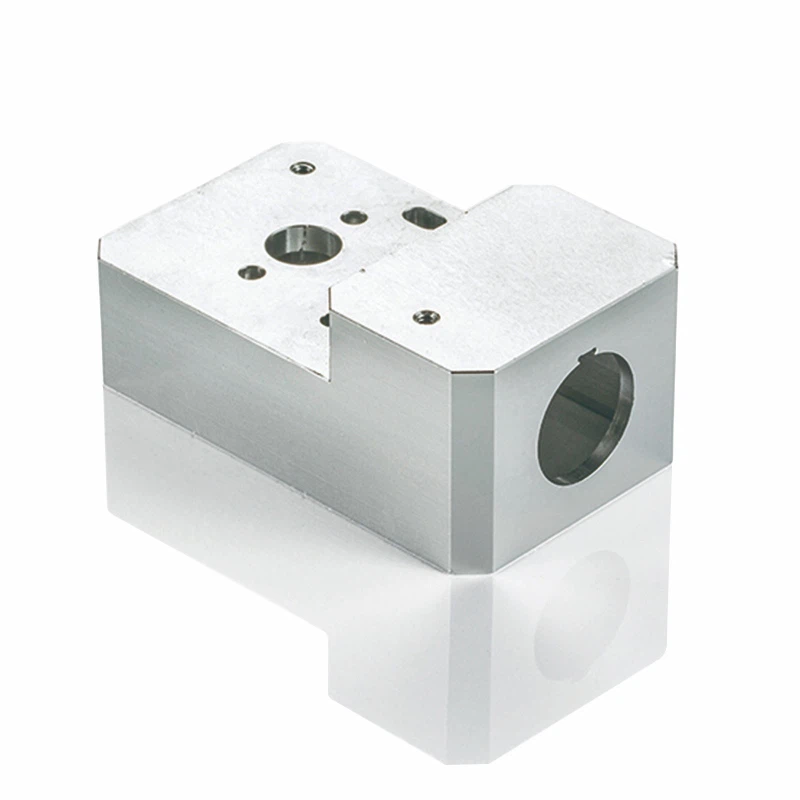
If you are interested in a specific type of component like Linear Rall System Slide Block Assembly, which may involve both milling and turning processes, our custom - made solutions can meet your needs.

6. Cost Considerations
Setup Costs
CNC milling generally has higher setup costs compared to CNC turning. This is because milling machines often require more complex tooling setups and programming. For multi - axis milling machines, the setup process can be time - consuming and requires skilled operators. Additionally, the cost of the cutting tools for milling can be relatively high, especially for specialized tools used for creating complex geometries.
CNC turning has relatively lower setup costs. The setup of a turning machine mainly involves mounting the workpiece and the cutting tool, which is a simpler process. The programming for turning operations is also generally less complex, resulting in lower setup time and cost.
Production Costs
For small - batch production, the per - part cost of CNC milling may be higher due to the high setup costs. However, for large - batch production of complex parts, the cost per part can be reduced as the setup costs are spread over a larger number of parts.
In CNC turning, the production cost is relatively stable regardless of the batch size. Since the setup costs are low and the material removal rate is high, turning is often more cost - effective for producing large quantities of simple cylindrical parts.
7. Conclusion
In summary, CNC milling and turning of aluminum alloys have distinct differences in terms of basic principles, geometric capabilities, material removal rate, tooling, applications, and cost. As a supplier of CNC machining aluminum alloys, we understand the unique requirements of different industries and can provide customized solutions based on the specific needs of our customers. Whether you need complex parts with intricate geometries or simple cylindrical components, we have the expertise and equipment to deliver high - quality products.
If you are looking for high - precision CNC machining services for aluminum alloys, including custom - designed parts, Custom CNC Processing is available to meet your requirements. We invite you to contact us for further discussions on your procurement needs and to explore how we can work together to achieve your manufacturing goals.
References
- Boothroyd, G., & Knight, W. A. (2006). Fundamentals of Manufacturing Processes. John Wiley & Sons.
- Kalpakjian, S., & Schmid, S. R. (2013). Manufacturing Engineering and Technology. Pearson.
- Trent, E. M., & Wright, P. K. (2000). Metal Cutting. Butterworth - Heinemann.