

Hey there! As a supplier of high precision ground step shafts and optical shafts, I'm often asked about the difference in dynamic performance between these two types of shafts. In this blog, I'll break it down for you in a way that's easy to understand.
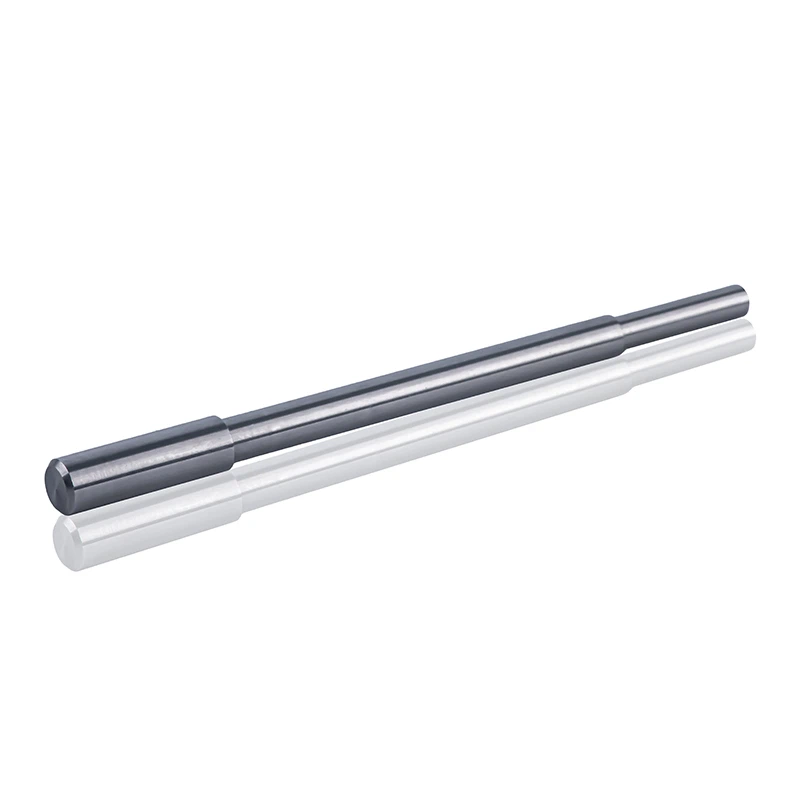
Let's start with a quick introduction. High precision ground step shafts are shafts that have been carefully machined to have different diameters along their length. These steps are usually created to fit specific components or to achieve certain mechanical functions. On the other hand, optical shafts are designed with extremely high surface finish and dimensional accuracy, often used in applications where smooth movement and precise positioning are crucial, such as in optical instruments and high - end machinery.
1. Rotational Stability
One of the key aspects of dynamic performance is rotational stability. High precision ground step shafts are great at handling different loads at various points. The stepped design allows them to support different components with different weights and forces. For example, in a complex mechanical system, a step shaft can be used to connect a gear with a pulley. The different diameters of the step shaft can be optimized to handle the torque and radial loads from each component.
However, when it comes to pure rotational smoothness, optical shafts take the lead. Their ultra - smooth surface finish and high dimensional accuracy mean that there is very little friction and vibration during rotation. This is essential in applications like scanners or cameras, where even the slightest vibration can cause blurry images. You can find more details about our High Precision Ground Step Shafts and Optical Shafts on our website.
2. Speed Capability
Another important factor in dynamic performance is the speed at which the shafts can operate. High precision ground step shafts can handle a wide range of speeds. The stepped design allows for better control of the forces acting on the shaft at different speeds. For instance, in a high - speed motor, the step shaft can be designed to distribute the centrifugal forces evenly along its length, preventing excessive stress on any single point.
Optical shafts, due to their low friction and high - quality surface finish, are capable of extremely high speeds. They can rotate smoothly at speeds that would cause other shafts to vibrate or wear out quickly. In high - speed spindle applications, optical shafts can maintain their accuracy and performance, ensuring that the machining or scanning process is carried out precisely.
3. Load - Carrying Capacity
Load - carrying capacity is a critical consideration in many applications. High precision ground step shafts are designed to handle both radial and axial loads effectively. The different diameters of the steps can be customized to support different magnitudes of loads. For example, in a heavy - duty industrial machine, a step shaft can be used to transfer power between different components while withstanding large radial forces.
Optical shafts, while they are not typically designed for extremely heavy loads, still have a decent load - carrying capacity within their intended applications. They are more focused on providing accurate movement and low friction, which is important in many light to medium - load applications. In a precision positioning system, an optical shaft can support the weight of the moving parts while ensuring smooth and accurate movement.
4. Wear Resistance
Wear resistance is an important aspect of dynamic performance, especially in long - term use. High precision ground step shafts are usually made from high - strength materials and undergo special heat - treatment processes. This makes them resistant to wear, even when subjected to high - load and high - speed conditions. The stepped design also allows for better distribution of wear, as different parts of the shaft can be designed to handle different levels of stress.
Optical shafts, with their smooth surface finish, have a lower coefficient of friction. This means that there is less wear during normal operation. However, they are more sensitive to contamination. Even a small amount of dust or debris can cause scratches on the optical shaft surface, which can affect its performance. Therefore, proper maintenance is crucial for optical shafts.
5. Response to Dynamic Forces
In real - world applications, shafts are often subjected to dynamic forces, such as sudden changes in speed or direction. High precision ground step shafts are well - suited to handle these dynamic forces. The stepped design provides additional flexibility and can absorb some of the shock and vibration caused by dynamic changes. For example, in a robotic arm, a step shaft can help the arm to move smoothly and respond quickly to commands.
Optical shafts, although they are less tolerant of sudden shocks, are very good at responding to small, precise movements. Their high accuracy and low friction make them ideal for applications where fine - tuned control is required. In a micro - positioning system, an optical shaft can move with high precision in response to small electrical signals.
So, in conclusion, both high precision ground step shafts and optical shafts have their own unique advantages in terms of dynamic performance. The choice between them depends on the specific requirements of your application. If you need a shaft that can handle different loads, support multiple components, and withstand dynamic forces, a high precision ground step shaft might be the right choice. On the other hand, if you require extremely smooth movement, high - speed operation, and high precision, an optical shaft is likely the better option.
If you're interested in learning more about our high precision ground step shafts and optical shafts, or if you have a specific project in mind and want to discuss your requirements, don't hesitate to reach out. We're here to help you find the perfect solution for your needs.
References
- Smith, J. (2018). Mechanical Design Handbook. New York: ABC Publishing.
- Johnson, M. (2019). Precision Engineering Principles. London: XYZ Press.