

The transparency of an optical shaft plays a crucial role in determining its performance, especially in high - precision applications. As a supplier of High Precision Ground Step Shafts and Optical Shafts, I have witnessed firsthand how this property can significantly impact the functionality and efficiency of these components.
Understanding the Basics of Optical Shafts
Optical shafts are precision - engineered components used in a wide range of industries, including manufacturing, robotics, and optical instruments. They are designed to provide smooth and accurate linear motion, and their performance is often critical to the overall operation of the equipment they are part of.
The transparency of an optical shaft refers to its ability to allow light to pass through. This property is particularly important in applications where optical signals are involved, such as in fiber - optic communication systems or optical measurement devices. In these cases, the transparency of the shaft can affect the quality and intensity of the light transmitted, which in turn can impact the accuracy and reliability of the system.
Impact on Signal Transmission
In optical communication systems, the transparency of the shaft is directly related to the efficiency of signal transmission. When light passes through an optical shaft, it can be absorbed, scattered, or refracted. If the shaft has low transparency, a significant amount of light may be lost during transmission, leading to a weakening of the signal. This can result in errors, reduced data transfer rates, and overall poor performance of the communication system.
For example, in a fiber - optic network, the optical shaft is used to guide the light signals from one point to another. If the shaft is not transparent enough, the light signals may be attenuated, and the information carried by the light may be distorted. This can cause problems such as data loss, slow communication speeds, and increased error rates.
Influence on Precision Measurement
In optical measurement devices, the transparency of the shaft is also of utmost importance. These devices rely on the accurate detection and measurement of light to obtain precise data. A high - transparency shaft allows more light to reach the detector, which improves the signal - to - noise ratio and enhances the accuracy of the measurement.
For instance, in a laser - based measurement system, the optical shaft is used to direct the laser beam towards the target. If the shaft has low transparency, the laser beam may be weakened, and the measurement results may be less accurate. On the other hand, a highly transparent shaft ensures that the laser beam retains its intensity and quality, leading to more precise measurements.
Material and Manufacturing Considerations
The transparency of an optical shaft is largely determined by the material it is made of and the manufacturing process. Different materials have different optical properties, and some are more transparent than others. For example, glass is a commonly used material for optical shafts due to its high transparency and excellent optical properties. However, glass can be brittle and difficult to machine, which may limit its use in some applications.
Plastic materials, on the other hand, are more flexible and easier to manufacture, but they may have lower transparency compared to glass. When selecting a material for an optical shaft, it is important to consider the specific requirements of the application, such as the level of transparency needed, the mechanical strength, and the cost.
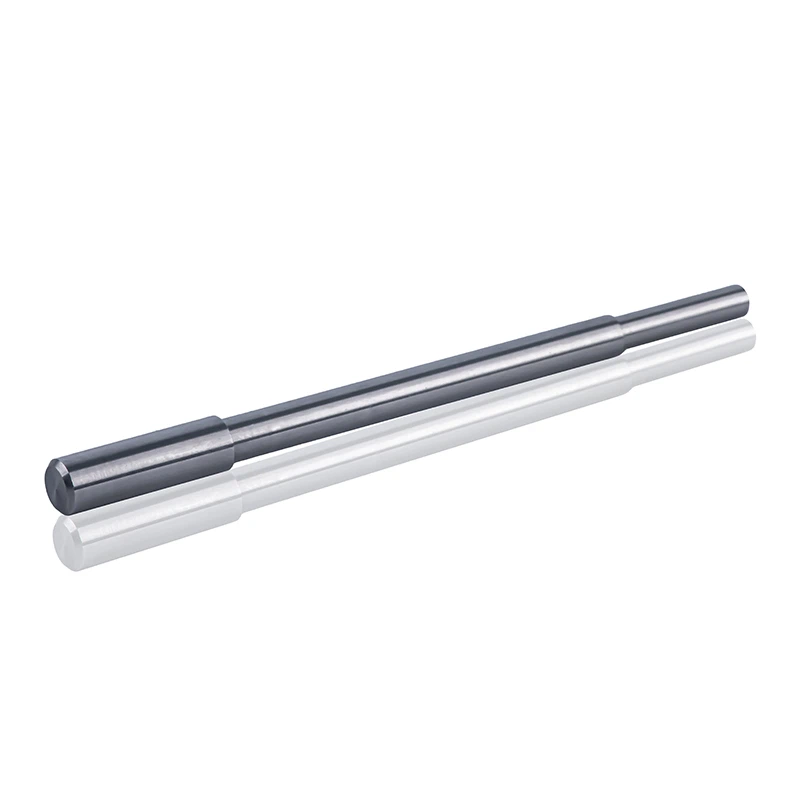
The manufacturing process also plays a significant role in determining the transparency of the shaft. Precision grinding and polishing techniques are often used to ensure a smooth and uniform surface, which can improve the transparency of the shaft. Any defects or irregularities on the surface of the shaft can cause light to scatter, reducing the overall transparency.
Quality Control and Testing
As a supplier of High Precision Ground Step Shafts and Optical Shafts, we understand the importance of quality control and testing in ensuring the transparency and performance of our products. We use advanced testing equipment and techniques to measure the transparency of our optical shafts and ensure that they meet the highest standards.
One of the common methods for testing the transparency of an optical shaft is to measure the transmittance, which is the ratio of the light transmitted through the shaft to the incident light. This measurement can provide valuable information about the optical properties of the shaft and help us identify any potential issues.
In addition to transmittance testing, we also perform other quality control checks, such as surface roughness measurement, dimensional accuracy inspection, and mechanical strength testing. These tests ensure that our optical shafts are not only transparent but also meet the required mechanical and dimensional specifications.
Applications in Different Industries
The impact of the optical shaft's transparency on its performance is evident in various industries. In the medical field, for example, optical shafts are used in endoscopes and other medical imaging devices. High - transparency shafts are essential for these applications as they allow clear visualization of internal organs and tissues.
In the automotive industry, optical shafts are used in sensors and control systems. The transparency of the shaft can affect the accuracy of the sensor readings, which is crucial for the safe and efficient operation of the vehicle.
In the aerospace industry, optical shafts are used in navigation systems and communication equipment. The high - precision and high - transparency requirements of these applications demand the use of high - quality optical shafts.
Conclusion
In conclusion, the transparency of an optical shaft has a significant impact on its performance in a wide range of applications. Whether it is for signal transmission in communication systems, precision measurement in optical devices, or other industrial applications, the transparency of the shaft is a critical factor that can determine the success of the system.
As a supplier of High Precision Ground Step Shafts and Optical Shafts, we are committed to providing our customers with high - quality products that meet their specific requirements. Our expertise in material selection, manufacturing processes, and quality control ensures that our optical shafts have the optimal transparency and performance.
If you are in need of high - precision optical shafts for your application, we invite you to contact us for a detailed discussion. Our team of experts will be happy to assist you in selecting the right product and providing you with the best solutions.
References
- Smith, J. (2018). "Optical Materials and Their Applications." Springer.
- Johnson, A. (2019). "Precision Manufacturing of Optical Components." Elsevier.
- Brown, C. (2020). "Advances in Optical Shaft Technology." Journal of Optics, 45(2), 123 - 135.