

When it comes to machining a carbon steel motor shaft with thread and step, selecting the right tool is crucial for achieving high - quality results and ensuring efficient production processes. As a supplier of Carbon Steel Motor Shaft with Thread and Step, I have gained extensive experience in understanding the nuances of tool selection for this specific type of machining. In this blog post, I will share some key considerations to help you choose the appropriate tools for the job.
Understanding the Material: Carbon Steel
Carbon steel is a popular choice for motor shafts due to its high strength, excellent machinability, and relatively low cost. However, different grades of carbon steel have varying properties. For instance, low - carbon steels are more ductile and easier to machine, while high - carbon steels are harder and require more robust cutting tools. Knowing the exact grade of carbon steel you are working with is the first step in tool selection.
Cutting Tools for Turning Operations
Turning is a fundamental operation in machining a motor shaft. For rough turning of carbon steel motor shafts, carbide inserts are often the preferred choice. Carbide is hard and can withstand high cutting speeds and feed rates, which helps in removing large amounts of material quickly. The geometry of the carbide insert also matters. A sharp cutting edge with a positive rake angle can reduce cutting forces and improve chip formation.
For finishing operations, ceramic inserts can be considered. Ceramic has excellent heat resistance and can produce a better surface finish compared to carbide. However, it is more brittle, so the cutting parameters need to be carefully controlled to avoid insert breakage.
Threading Tools
Creating the threads on the motor shaft is a critical process. There are two main types of threading tools: single - point threading tools and threading dies.
Single - point threading tools offer more flexibility in terms of thread profile and pitch. They can be used on a lathe or a CNC machine. High - speed steel (HSS) single - point threading tools are suitable for low - to medium - speed threading operations on carbon steel. Carbide - tipped single - point threading tools, on the other hand, can handle higher cutting speeds and are more wear - resistant, making them ideal for large - volume production.
Threading dies are more commonly used for simpler threading applications. They are available in various types, such as hand dies and machine dies. Hand dies are suitable for small - scale or manual operations, while machine dies are used in automated or semi - automated machining processes. When using threading dies, it is important to ensure that the die size and pitch match the required thread specifications of the motor shaft.
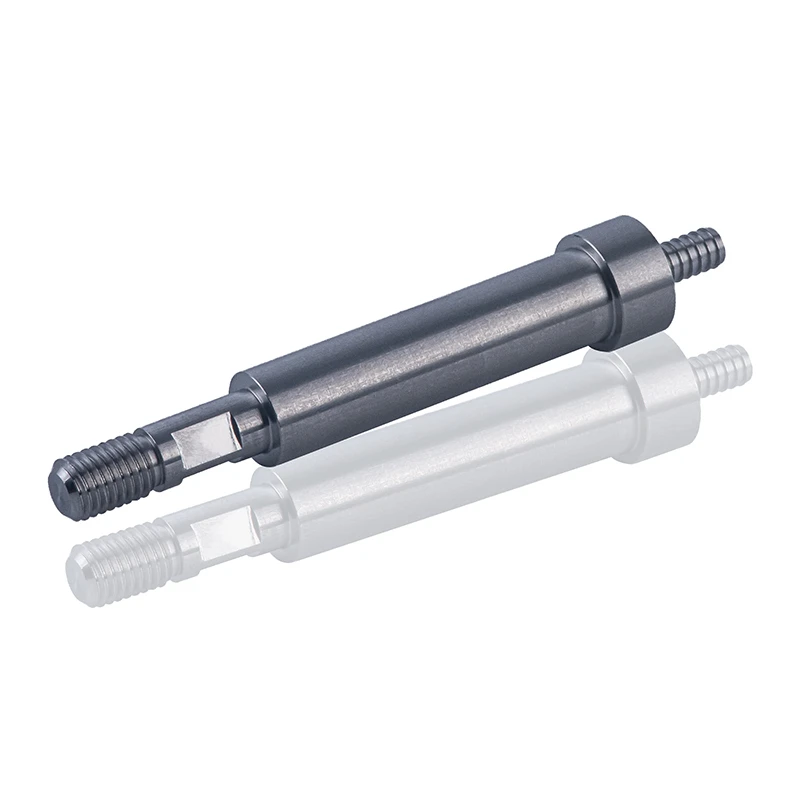
Step Machining Tools
To create the steps on the motor shaft, end mills are often used. For carbon steel, solid carbide end mills are a popular choice. They provide high cutting performance and can withstand the rigors of machining hard materials. The number of flutes on the end mill affects the cutting process. A two - flute end mill is better for roughing operations as it can remove chips more efficiently, while a four - flute end mill is suitable for finishing operations due to its ability to produce a smoother surface finish.
Another option for step machining is the use of form tools. Form tools are custom - designed to create specific step profiles in a single pass. They can significantly reduce machining time and improve the accuracy of the step dimensions. However, they are more expensive to manufacture, so they are typically used in high - volume production.
Tool Coatings
Tool coatings can enhance the performance and lifespan of cutting tools. Titanium nitride (TiN) is one of the most common coatings for tools used in carbon steel machining. It increases the hardness of the tool, reduces friction, and improves wear resistance. Titanium aluminum nitride (TiAlN) coatings are even more heat - resistant than TiN and are suitable for high - speed machining operations.
Considerations for CNC Machining
In today's manufacturing environment, CNC machines are widely used for machining carbon steel motor shafts. When using a CNC machine, the tool selection needs to be compatible with the machine's capabilities. The tool holders and tool changers on the CNC machine should be able to accommodate the selected tools.
Moreover, the programming of the CNC machine should take into account the cutting parameters of the chosen tools. These parameters include cutting speed, feed rate, and depth of cut. Incorrect cutting parameters can lead to poor surface finish, premature tool wear, or even damage to the workpiece.
Quality Control and Tool Inspection
Even after selecting the right tools, it is essential to have a proper quality control system in place. Regularly inspecting the cutting tools can help detect signs of wear or damage early. Worn - out tools can produce inconsistent results and affect the quality of the machined motor shaft.
Using tool inspection equipment, such as microscopes or tool presetters, can ensure that the tools are in good condition before and during the machining process. Additionally, maintaining a record of tool usage and performance can help in optimizing tool selection and replacement schedules.
Cost - Benefit Analysis
While it is important to select high - quality tools for machining carbon steel motor shafts, cost is also a significant factor. Balancing the cost of the tools with their performance and lifespan is crucial. Sometimes, a slightly more expensive tool with a longer lifespan and better performance can be more cost - effective in the long run, especially for high - volume production.
In conclusion, selecting the right tool for machining a carbon steel motor shaft with thread and step requires a comprehensive understanding of the material, the machining operations involved, and the available tool options. By considering the factors mentioned above, you can optimize your machining process, improve the quality of the finished product, and increase your production efficiency.
If you are looking for high - quality carbon steel motor shafts with thread and step or need further advice on tool selection for machining, we are here to help. Contact us to discuss your specific requirements and start a successful procurement negotiation.
References
- Kalpakjian, S., & Schmid, S. R. (2013). Manufacturing Engineering and Technology. Pearson.
- Trent, E. M., & Wright, P. K. (2000). Metal Cutting. Butterworth - Heinemann.